

September on Lake Como brings with it a softer light and a gentler rhythm. The intense heat of August begins to loosen, mornings feel fresher, and there is a subtle change in the air. Summer has not disappeared, yet the first signs of autumn can be felt in the cooler evenings and golden light across the mountains.
This is an especially beautiful month for discovering Lake Como’s nautical heritage. Historic motorboats gather at Villa d’Este, classic sails return to the waters around Bellagio, and the traditional workboats that once carried people and goods across the Lario reveal another side of the lake’s story. From elegant vintage craft to the humble boats once used by fishermen, every vessel tells us something about life shaped by the water.
Back in the kitchen, we celebrate Noci (walnuts), whose earthy richness brings depth and texture to early-autumn cooking. Our Recipe of the Month is Salsa di Noci, the ivory-colored walnut sauce traditionally served with pansoti. Creamy, aromatic, and quietly luxurious, it is a dish that carries us gently from the brightness of summer toward the more comforting flavors of autumn.
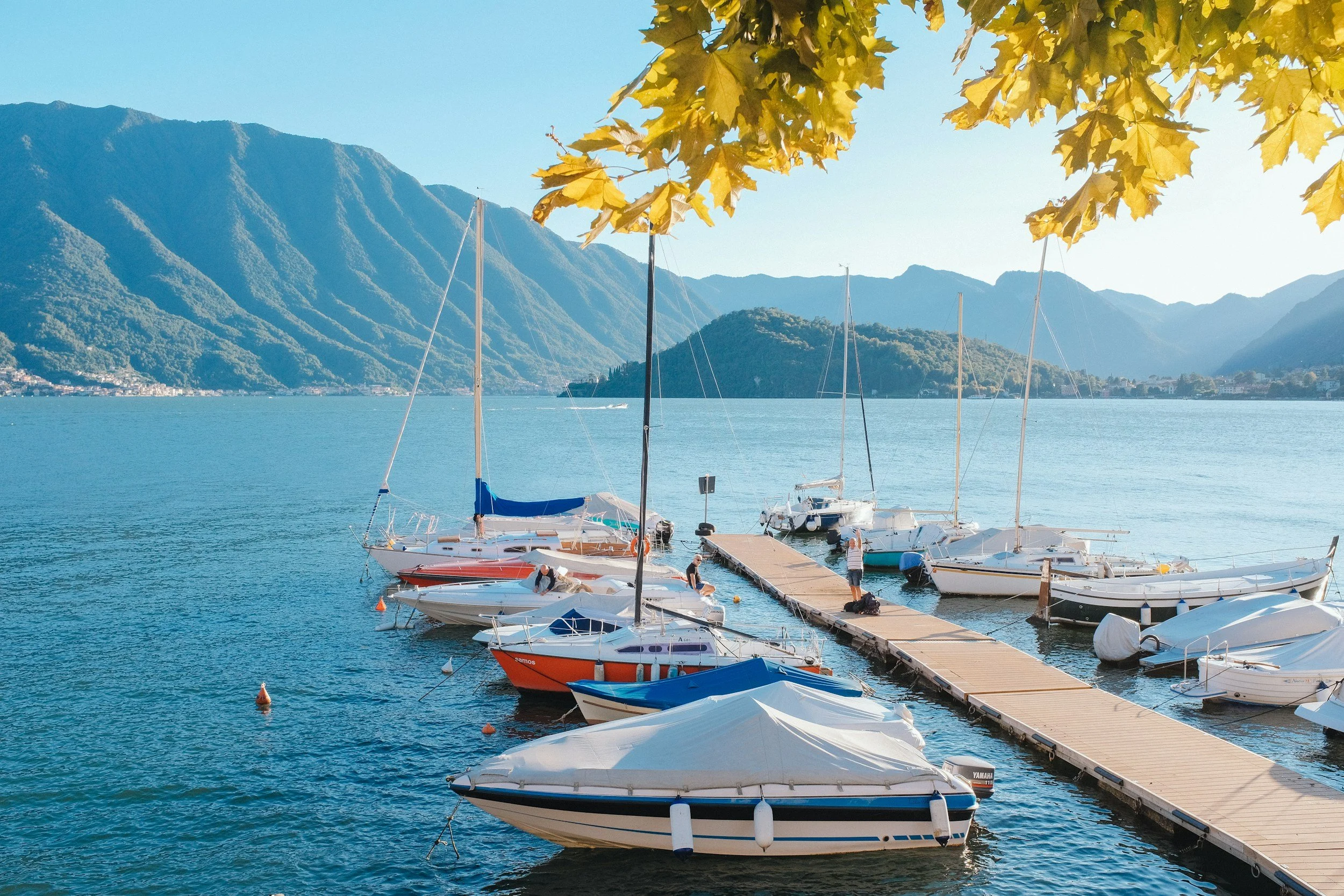
Historic Boats and Sailing
Lake Como has always been shaped by boats. Long before polished wooden launches became part of its glamorous image, vessels were essential to daily life. They carried fish, wood, stone, food, letters, and people between villages that were often easier to reach by water than by road.
September is a particularly fitting time to explore this history. It is a chance not only to admire beautiful boats, but to understand the craftsmanship, working traditions, and winds that have shaped life here for generations.
Villa d’Este Style Vintage Yachting & Grand Tour, Cernobbio
On Saturday, September 12, Villa d’Este hosts Villa d’Este Style Vintage Yachting, a celebration of historic motorboats. The boats gather on the water before parading individually in front of the hotel, where they are presented to guests and judged for their history, craftsmanship, and elegance. The programme includes the Villa d’Este Elegance Award and concludes in the afternoon with a Vintage Jole Regatta, a traditional rowing challenge. The experience costs €180 per person. Until September 19, Villa d’Este will also host a selection of historic boats.
There is also a vintage yachting event, running from September 9 to 19. The northern six-hour itinerary includes several lake towns, including Sala Comacina, Lenno, Menaggio, Varenna, Tremezzo, Lezzeno, and Bellano, combining navigation with a visit to Museo Barca Lariana, lunch, and time near Villa del Balbianello. The southern itinerary includes Villa d’Este and the historic Ernesto Riva boatyard. It is a wonderful way to connect the finished boats with the craftsmanship and places that created them.
Trofeo Grand Hotel Villa Serbelloni & Salmone d’Argento, Pescallo
From September 18 to 20, the small bay of Pescallo, on the quieter eastern side of Bellagio, becomes the setting for one of the lake’s most atmospheric sailing weekends. The Trofeo Grand Hotel Villa Serbelloni is devoted to vintage and classic sailing boats, bringing together historic wooden yachts, traditional craft, and classic vessels for a weekend. The event has become a beautiful end-of-summer tradition.
The racing takes place across the central lake, with activity on September 19 and 20 in the waters around Bellagio, Menaggio, and San Siro. Alongside the historic-sail gathering is the Salmone d’Argento. Even if you are not sailing, Pescallo is a lovely place from which to experience the event. Find a position along the shore and watch the classic sails move across the central lake, with the mountains and villages forming a backdrop that feels almost unchanged by time.
Museo Barca Lariana, Pianello del Lario
For a deeper understanding of why boats matter so much to Lake Como, head north to Museo Barca Lariana in Pianello del Lario. Housed in a historic nineteenth-century spinning mill, the museum preserves an extraordinary collection of more than 400 boats. Each tells a different story about the people who lived and worked on the lake.
The Workboats Corridor is particularly fascinating. Here you can discover the traditional batei and other Larian working boats once used for fishing, transport, trade, and even smuggling. This is not simply a collection of beautiful boats, but a history of Lake Como told through wood, engines, sails, oars, and the people who knew how to use them.
Sailing from Dervio
After looking at historic boats, the best way to understand Lake Como’s sailing culture is to experience the wind for yourself. Dervio, on the eastern shore of the northern lake, is one of the most established places to do it. Here, two of the lake’s characteristic winds shape the sailing day: the Breva arriving from the south and the Tivano from the north. Orza Minore operates adult sailing courses in Dervio for everyone from complete beginners to experienced sailors looking to refine their technique.
Cabin-cruiser courses run on weekends from March through the end of November, while adult dinghy courses continue through the end of October, making September an excellent month to learn. The air is still warm, the lake is less crowded than in August, and the wind gives the northern Lario its distinctive sportive energy. Even a short course changes the way you understand the lake. From the water, distances, winds, shorelines, and mountains take on a different meaning. Lake Como stops being simply something to look at and becomes something to read, respond to, and move through.
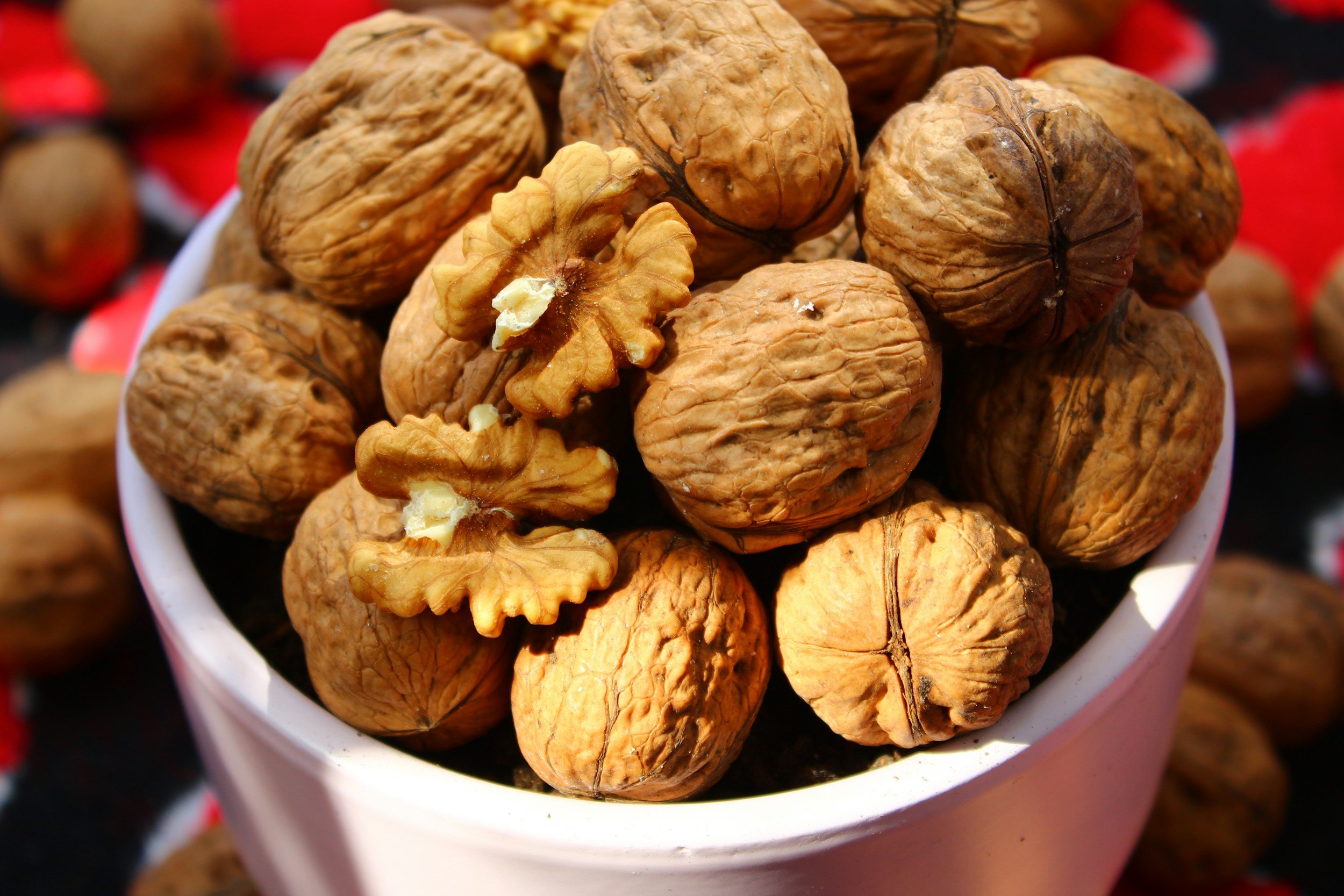
Ingredient of the Month: NOCI (walnuts)
September is walnut harvest season. From around the middle of the month, newly gathered walnuts begin to appear with pale, tender kernels and a higher natural moisture content than the dried walnuts we use throughout winter. Their flavor is fresher and gentler too, with less of the characteristic tannic bitterness that develops as the nuts dry and their flavor becomes deeper and more concentrated.
Italian kitchens use walnuts in both sweet and savory dishes. They are ground into sauces, folded into breads and cakes, scattered over salads, served alongside cheese, and paired beautifully with honey, pears, and dark chocolate. Their natural richness makes them particularly good with creamy ingredients, while that slight earthy bitterness provides balance and keeps sweeter combinations from becoming cloying.
If you are lucky enough to find truly fresh walnuts, enjoy them quickly. Their higher moisture content means they should be kept refrigerated and eaten within a few days. Dried shelled walnuts will keep much longer, but we still prefer to store them in the refrigerator or freezer to protect their delicate oils and prevent them becoming rancid.
HERE ARE FOUR OF OUR FAVORITE ITALIAN WAYS TO WALNUTS THIS MONTH:
Torta di Noci e Miele: A rich autumn walnut cake in which finely ground walnuts bring texture and depth while honey adds a fragrant sweetness. Chestnut honey is particularly beautiful here, with just enough bitterness to echo the walnuts. Serve simply with coffee, a spoonful of mascarpone, or as the final bite after a long September lunch.
Crostini con Ricotta, Noci e Miele: Toasted country bread spread generously with whipped ricotta, then finished with walnuts, honey, black pepper, and a few fresh thyme leaves. Creamy, crunchy, sweet, and savory all at once, it is a simple autumn antipasto that depends entirely on the quality of its ingredients.
Noci e Gorgonzola Dolce: Walnuts and creamy Gorgonzola Dolce are one of those combinations that need almost nothing else. Add slices of ripe pear, dark country bread, or just a thread of chestnut honey and serve at the end of a meal when September evenings begin to turn cool.
Nocino: Nocino begins long before the autumn walnut harvest. The traditional liqueur is made with still-green walnuts gathered around the feast of San Giovanni in June, then slowly macerated with alcohol, sugar, and spices before being filtered and matured. September is the time to reach for a bottle prepared the previous year, dark, aromatic, bittersweet, and served in the smallest of glasses after dinner.
RECIPE OF THE MONTH: SALSA DI NOCI (WALNUT PASTA SAUCE)
Salsa di Noci is one of Italy’s great culinary treasures. Known in Genoese tradition as sarsa de noxi, this pale, creamy walnut sauce is the classic companion to pansoti, the plump parcels of fresh pasta filled with wild herbs, greens, and fresh cheese. It is a beautiful example of the quiet ingenuity of Ligurian cooking, where nuts, bread, cheese, garlic, and olive oil are transformed into something extraordinarily luxurious without a drop of cream.
What makes a good Salsa di Noci is balance. The walnuts must remain unmistakably at the centre of the sauce. The bread softens their intensity and helps create the characteristic creamy texture, while Parmigiano adds savory depth and prescinseua ( a traditional Genoese fresh curd) gives a delicate acidity. Garlic should be present only as a perfume, never as the first flavor you taste.
The technique matters too. Traditionally the sauce is worked patiently in a mortar, but a food processor can produce an excellent result if used carefully. The walnuts should never be processed aggressively until oily. Working them with the milk-soaked bread helps keep the sauce pale and creamy. Most importantly, Salsa di Noci is not a sauce to cook. Loosen it with a little hot pasta water and bring the pasta to the sauce, away from direct heat.
Ingredients:
500 g (1.1 lb) fresh delicate fresh pasta of your choice
200 g (7 oz) shelled walnuts
70 g (2½ oz) soft white bread crumb from a day-old country loaf
120 ml (½ cup) whole milk, plus a little extra if required
50 g (1¾ oz, about ½ cup loosely packed) finely grated Parmigiano Reggiano
80 g (3 oz) prescinseua (alternative: whole-milk ricotta mixed with 20 g (about 1½ tbsp) plain full-fat yoghurt)
½ small garlic clove
45 to 60 ml (3 to 4 tbsp) extra-virgin olive oil
1 tsp fresh marjoram leaves, optional
½ tsp fine sea salt, plus more for the pasta water
60 to 120 ml (¼ to ½ cup) reserved pasta cooking water, as needed
A few walnut pieces and a little additional Parmigiano Reggiano, for serving
Instructions:
Prepare the walnuts: Bring a small saucepan of water to the boil. Add the walnut kernels and blanch for 2 to 3 minutes. Drain and remove as much of the thin brown skin as practical.
Soak the bread: Place the bread crumb in a small bowl and pour over the milk. Leave it to soften for about 10 minutes, then squeeze it gently between your hands. Reserve the remaining milk.
Begin the sauce: In a mortar, work the garlic and salt into a fine paste. Add the walnuts a little at a time together with pieces of the soaked bread, grinding patiently until the mixture becomes fine and creamy. If using a food processor, add the walnuts and soaked bread together and pulse in short bursts rather than running the machine continuously.
Add the cheese: Add the Parmigiano, prescinseua, and marjoram if using. Work or pulse only until everything is evenly combined.
Finish with olive oil: Add the extra-virgin olive oil gradually until the sauce becomes smooth, creamy, and cohesive. If necessary, add a spoonful of the reserved milk. The finished sauce should be thick at this stage, as the pasta water will loosen it later.
Cook the pasta: Bring a large pot of well-salted water to the boil and cook the chosen pasta until tender. Before draining, reserve at least 150 ml of the cooking water.
Loosen the sauce: Spoon the Salsa di Noci into a large, warmed serving bowl. Add hot pasta water a little at a time, stirring until it reaches the consistency of a loose cream. Do not place the sauce over direct heat.
Dress the pasta: Transfer the drained pasta directly into the bowl and fold everything together gently. Add another spoonful of pasta water if needed. The sauce should cling silkily to the pasta without pooling heavily at the bottom of the bowl.
Serve: Divide immediately among warm plates and finish with just a few walnut pieces and a light scattering of Parmigiano. The sauce should arrive at the table pale, creamy, fragrant, and still tasting unmistakably of walnuts.
Why we Love it: Salsa di Noci captures September beautifully. It has the richness and comfort we begin to crave as the evenings grow cooler, but it never feels heavy. We love its soft ivory color, the delicate bitterness of the walnuts, and the way a handful of humble ingredients become something so creamy and luxurious without relying on cream. Most of all, it is a recipe that rewards restraint. A little garlic, good walnuts, fresh cheese, olive oil, and careful technique are all it needs. Served over fresh pasta, it feels generous, quietly elegant, and deeply rooted in the Italian tradition of making something exceptional from very little.
Wine Pairing: Pair Salsa di Noci with a Riviera Ligure di Ponente Pigato DOC, it suits the sauce far more naturally than a tannic red. Pigato has the freshness and savory character to lift the richness of the walnuts and cheese, while its characteristic herbal, citrus, and gently almond notes mirror the flavors of the dish without overwhelming them. Serve it cool, around 10 to 12°C, so its fragrance remains expressive and its acidity brings freshness to every mouthful.
As the summer light softens and the lake settles into its gentler autumn rhythm, we hope you find time to enjoy Lake Como from a different perspective, whether watching historic sails cross the water, discovering the craftsmanship behind its traditional boats, or simply lingering over a plate of pasta dressed with the first walnuts of the season. May the month bring cooler evenings, quieter shores, and the pleasure of traditions that continue to shape life around the lake.
See you on the lake,
The Lake Como Kitchen Experience Team